
Ultrasonic Rust Removal – Applications and Procedures

|
Get Expert Advice Save time. Let us help you
find the perfect cleaning system for your needs and budget. 973-821-3406 | Chat | Email |
Rust is the silent destroyer of costly ferrous metal parts. Caught early enough it can be removed by immersing parts in an ultrasonic cleaning process described below. Read on to find where and how ultrasonic cleaning brings new life to candidates for the scrap heap.
What is Rust?
Rust is oxidation, and oxidation can be equaled to corrosion and burning. In this case slow burning. For an example of fast oxidation and burning set a match to a pad of ultra fine steel wool, or better - view this short video.
Applications for Ultrasonic Rust Removal
A short stint in an ultrasonic bath might turn a seemingly useless item into a useful (and profitable) item. Organizations that can benefit include:
- Maintaining professional tools – adjustable and socket wrenches, saw blades, chisels, calipers and similar equipment.
- Asset recovery and recycling services – Cleaning and repairing rust-damaged equipment for resale.
- Automotive salvage yards – Clean undamaged parts from engines, drive trains and other components for resale.
- Used or re-possessed manufacturing and construction equipment suppliers and resellers.
- Classic car restoration – Restoring rusted but serviceable OEM components.
- Museums – restoring examples of early tools, transportation, agricultural and manufacturing equipment for exhibition.
- Offsite equipment maintenance – contract repair and refurbishing service.
- Antique dealers and collectors – cleaning rusted hardware, tools and other collectables
Ultrasonic rust removal is
- Fast – rust removal can be accomplished in minutes – depending on extent.
- Efficient – ultrasonic cleaners do the job while you attend to other matters.
- Thorough – Reaches cracks, crevices, blind holes and other surfaces inaccessible by manual methods.
- Environmentally friendly – biodegradable cleaning solutions (recommendation below) replace harmful solvents and sprays.
How Ultrasonic Rust Removal Works
Skip this if you are familiar with the topic. Or check our post describing how ultrasonic cleaners work.
An ultrasonic rust removal cleaner has generator-powered transducers vibrating at ultrasonic frequencies bonded to the bottom and/or sides of the ultrasonic cleaner tank.
When activated the transducers cause tank surfaces to vibrate as a membrane, creating microscopic vacuum bubbles that implode on contact with items immersed in the tank.
The process loosens and carries away contaminants – such as rust.
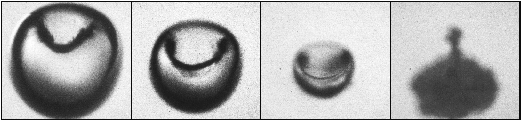
The process does not damage surfaces. And because bubbles are so tiny they penetrate blind holes, crevices and other “tight spots” impossible to reach by manual cleaning methods.
Selecting an Ultrasonic Cleaner for Rust Removal
Ultrasonic cleaner selection is governed by these factors.
- Number of parts to be cleaned per cycle
- Size of parts to be cleaned
- Items being cleaned must be fully immersed in the cleaning solution
- Keeping parts from contact with each other
- Duration of cleaning cycles – occasional or shifts as examples
Tank dimensions and volume come into play but also a recognition that cleaning basket dimensions, in which items are placed (with exceptions noted below), are slightly smaller.
Related to this is what is called the working depth, which is the distance between the bottom of the cleaning basket and the surface of the cleaning solution.
Ultrasonic Rust Removal Equipment Options
Here we present options for
- Small Parts Rust Removal – Occasional Operation
- Small Parts Rust Removal – Longer Term Operation
- Large Part Rust Removal – Major Restorations
Cleaning Small Parts on an Occasional Basis
For small parts rust removal on a job or occasional basis we suggest the 37 kHz Elmasonic E Plus units available from iUltrasonic in 9 tank capacities from 0.25 to 7.5 gallons and basket dimensions (w/d/h) from 6.1 x 2.8 x 1.4 to 17.7 x 10 x 5.3 inches.
Important features of the E Plus series:
- Thermostatically controlled temperature to 80°C
- Timers to 30 minutes or continuous with a 6-hour auto shut-off
- Automatic power adjusts to match the cleaning load
- Dynamic mode provides uniform cleaning and tenacious contaminant removal
- Eco mode delivers quiet, gentle cleaning and helps extend tank life
The Dynamic mode can be activated to speed mixing and degassing fresh cleaning solutions.
Cleaning Small Parts on a Shift Basis
For small parts rust removal on a continuing (shift) basis the 37kHz benchtop Elmasonic Xtra series is offered in 5 tank capacities from 1 to 7.9 gallons and basket dimensions (w/d/h) from 7.7 X 4.1 x 3.7 inches to 17.7 x 10 x 5.3 inches.
These units feature welded stainless steel tanks to accommodate long-term cycles, and carry a 3-year warranty. Other features include:
- Dynamic Mode for extra powerful cleaning with consistent, uniform cleaning results
- Energy-saving Eco Mode for gentle cleaning less-rusted parts
- Set bath temperature from 30 to 80°C
- Set timed cleaning to 30 minutes, continuous to 6 hours with auto shut-off
- Audio/visual alert at cycle completion frees you to attend to other matters
- Auto safety shutoffs at 90°C or low cleaning solution level protect your investment
Options are also available for removing rust from large parts.
The floor-mounted mobile Elmasonic xtra ST industrial ultrasonic cleaners are available in 7 welded tank capacities from 7.9 to 67.4 gallons and basket dimensions (w/d/h) from 17.7 x 10 x 5.3 inches to 24.8 x 22.6 x 14.4 inches.
- LED control panel displays set and actual operating parameters
- Dual frequency – 25 kHz for tough cleaning, 45 kHz for gentle cleaning
- Sweep mode for uniform results
- Pulse mode for removing tough, tenacious contaminants
- Dynamic mode switches between sweep and pulse for faster results
- Heater from 30 to 80°C; auto shut-off at 90° for safety
- Timer from 1 to 30 minutes or auto shut-off at 12 hours
Setting Up Your Ultrasonic Rust Removal Procedure
Pro Tip: Types of Rust. Keep in mind that surface rust, also called flash rust, is that fine, orangey color on the surface of parts. Then there is deeper, flaking rust – the result of longer-term exposure to the elements that has removed ferrous metal from parts. No cleaning method can replace removed metal.
Take the time to remove flaking rust and other loose contaminants from parts before placing them in the ultrasonic rust removal bath.
Ultrasonic cleaning solutions are available in many formulations, some of which are ideal for rust removal. Other formulations are designed to temporarily protect cleaned surfaces from rusting until they are otherwise treated.
A recommended cleaning solution for removing rust is Elma tec clean S1, available from iUltrasonic. It is a biodegradable, mildly acidic formulation for removing corrosion, and rinses residue free. Diluted to 1 to 5% with water, it’s a highly economical solution as a little goes a long way to remove rust.
For temporary rust protection during and after cleaning add Elma KS rust inhibitor at dilutions to 0.05 to 0.5% either to the cleaning tank or to a post-cleaning rinsing bath.
As noted in our Pro Tip, we suggest using a wire brush or otherwise removing loose or flaking rust from the parts to help preserve cleaning solution effectiveness. Then you’re ready, and with experience you’ll develop your own rust removal routine.
Here’s a typical procedure using the Elmasonic E Plus equipment – that can be modified based on the unit you select:
- Fill the tank half way with water then add the correct amount of Elma tec clean S1 for a full tank and, if preferred, rust inhibitor Elma KS. Then add water to the tank fill line.
- Turn the unit on and activate the Dynamic mode to quickly mix and degas the solution.
- Set the heater to the recommended temperature (30 - 80°C for S1).
- If parts can be disassembled do so, then place them in the unit’s basket (ordered separately). Try to avoid contact between the parts.
- When the bath temperature reaches the set temperature lower the basket into the solution, set the timer and let ultrasonic rust removal action do its work.
Pro Tip: To check progress do not reach into the tank. Instead, remove the basket, examine the parts (they will be hot!) and reposition if required.
If you rinse parts when rust removal is completed, add the rust inhibitor to the rinsing bath. Dry the parts, spray them with an agent such as WD-40, and the job is finished.
How to Maintain Your Ultrasonic Rust Removal Cleaning Bath
As noted above, loose rust and other particles should be scraped or wire brushed before parts are cleaned.
During the cleaning cycle, contaminants that rise to the surface should be skimmed off and set aside. Hard contaminants fall to the tank bottom.
When cleaning effectiveness falls off, drain the tank and discard the solution and skimmed off contaminants following local regulations. Take this time to thoroughly clean the tank following the manufacturer’s recommendations.
Note that certain models of large capacity ultrasonic cleaners such as the Elmasonic xtra ST units have rinsing and filtering options to help prolong cleaning solution effectiveness.
Need More Info? Contact the Experts
In summary, dirty or rusted equipment such as tools, pumps, gears, and mechanical assemblies can often be restored in an ultrasonic cleaner.
Contact the ultrasonic cleaning professionals at iUltrasonic for expert advice on selecting cleaning equipment, cleaning solution formulations and procedures to solve your toughest cleaning challenges.